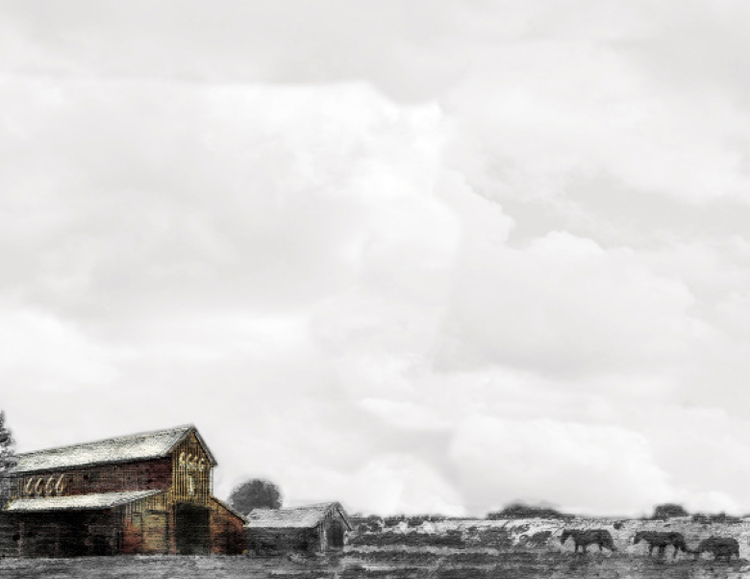
Stallions carry the legacy. The reputation. That matters.
But spend enough time on a working ranch and you learn something quickly. The mares are the backbone. They are the ones carrying the next generation, raising it, and shaping it from the ground up, day by day.
Your mares are not a secondary consideration. They are the foundation of your program.
Whether you’re managing a herd of mares or just one, the details matter.
Fertility is not luck of the draw. It's management.
Her Body is a Work Horse
Breeding season is not a single event. It is a sequence of biological demands, each one building on the last.
Before conception even happens, the mare's body is working. Her reproductive cycle is responding to light, temperature, and nutritional status. Her hormone levels are shifting. Her uterine environment is either preparing to receive and support an embryo, or it isn't. That preparation does not start at breeding. It starts weeks before.
Once conception occurs, the demands increase. The early embryo is fragile. It depends entirely on the mare's uterine environment for survival in those first critical days before it even attaches. Micronutrient balance, digestive stability, and immune function all play a role in whether that embryo develops or is lost.
As gestation progresses, the mare's nutritional requirements change with it. The developing foal draws from her reserves. Trace minerals stored in the liver and tissues are transferred to the fetus, building the foundation for that foal's early growth and bone development. If those reserves are thin, both the mare and the foal feel it.
Then comes foaling, and immediately after, lactation. Milk production places some of the highest nutritional demands a mare will face all year. Colostrum quality, which gives the foal its first immune protection, is directly influenced by the mare's nutritional status in the weeks leading up to foaling.
Every stage is connected. What you do at the start of breeding season sets the tone for all of it.
How to Support Your Broodmare's System
DO:
1. Schedule a Pre-Breeding Veterinary Exam
There are times for guesswork. Breeding season is not one of them.
A full reproductive exam, uterine evaluation, and overall health check allow you to identify issues early, before you lose a cycle.
2. Focus on Nutrition
Breeding is not a maintenance phase. The mare’s body is preparing for conception, early embryonic development, and eventually fetal growth. Micronutrient balance, mineral status, and digestive stability all matter now, not later.
3. Take an Honest Look at Body Condition
4. Track and Understand Cycles
It is important to know your mare’s patterns. Understanding timing, heat length, and ovulation windows improves your conception rates. Good breeding management is organized management.
You have to fill the nutrient gaps. Trace minerals like copper, zinc, and selenium support immune function, metabolic health, and healthy fetal development.² Our Four Sixes Multi-Vitamin & Mineral addresses common nutrient gaps with highly bioavailable nutrients and 100% organic trace minerals to support overall wellness before demands increase.
6. Prioritize Gut Health Now, Not LaterThe mare’s microbiome affects everything: fertility, gestation, and even colostrum quality.
DO NOT:
1. Ignore Routine Maintenance
Breeding season gets busy. Stay on top of routine vaccinations, deworming, hoof care, and dental care. Reproductive success depends on overall health.
2. Overlook Management Details
Artificial lighting programs. Turnout schedules. Stress levels. What works best for your operation will look different from the next ranch, but consistency matters.
3. Wait to Plan for Foaling
It feels far away. It's not.
Gestation will move quickly, and planning all of your foaling logistics should start now, not in month then.
The Bigger Picture
Your broodmare is not simply carrying a foal.
She is preparing. Creating. Nurturing. Building the next generation.
Breeding season success starts long before the ultrasound.
If you want to support your broodmares from the inside out this season, start with balanced nutrition, support digestive health, and build the foundation early.
Shop Foundational Support here.
We focus on the whole horse. The science. What works and stands the test of time, not chasing trends or quick fixes.
Formulated by veterinarians. Trusted on the ranch and in the arena. Built for horses that work.
References:
Shepherd M. Protecting your investment: nutrition for the broodmare. Presented at the Society for Theriogenology Annual Conference. 2015.
Hidiroglou M. Trace element deficiencies and fertility in ruminants: a review. J Dairy Sci. 1979
Barker VD et al. Current Understanding of Equine Gut Dysbiosis and Microbiota Manipulation Techniques. Animals (Basel). 2024;14(5):758.